
Estate Planning is "Important But Not Urgent" Until....
Dwight D. Eisenhower had a system.
As Supreme Allied Commander and later as President, the volume of decisions crossing Ike's desk was staggering — so he organized them. The result is what we now call the Eisenhower Matrix, and it may be the most useful lens for understanding why, for most of us, estate planning keeps … not happening.
Four quadrants. Two questions: Is it important? Is it urgent?
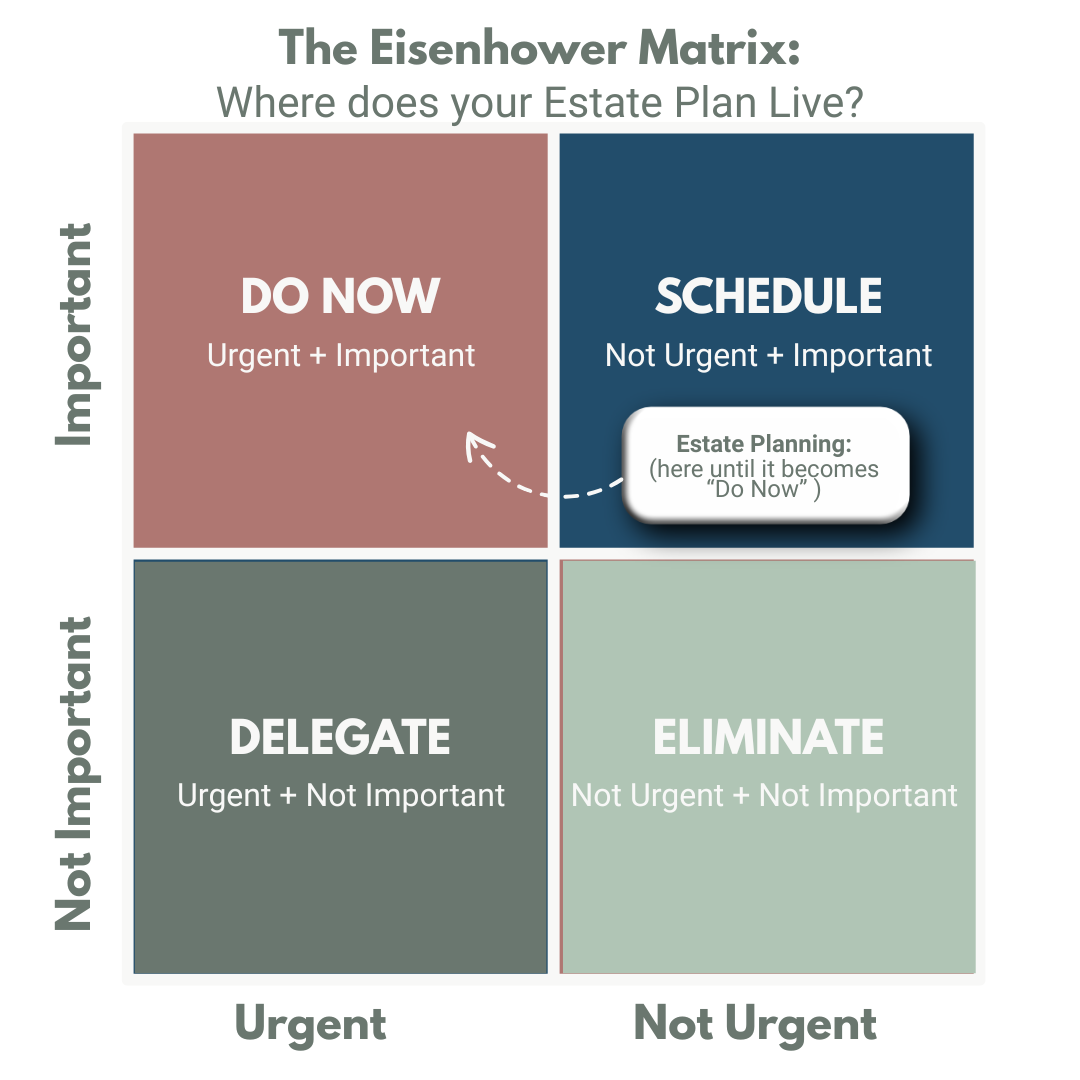 We all know by now that estate planning is important to "get our affairs in order," but maybe not so important today that we're frantically calling the attorney to get it done. For most of us, estate planning lives in the upper-right quadrant: Important, but Not Urgent. Not the frantic urgency of a sick child, or a deadline at work, or a scheduled surgery, or replacing the broken dishwasher — just a quiet, persistent knowing that you should get to it. Someday.
According to the Caring.com 2025 Wills and Estate Planning Study, just 24% of Americans have a will — down from 33% in 2022. Nearly half said they simply haven't gotten around to it.
The Real Cost of Staying in Quadrant Two
There's nothing wrong with the Important, Not Urgent quadrant — as a concept. That's where strategic thinking lives. Long-term planning. Meaningful work.
But "Important, Not Urgent" only holds as long as circumstances cooperate.
Across thirteen years in family conflict mediation and in my own personal experience, I've seen what happens when families are unprepared if the worst should happen. The outcome can shift dramatically. In one version, a plan exists — thoughtful, funded, current. In the other, there's nothing but intentions, and the family is left with a mess.
In fact, just the other day as I was picking up my dry cleaning, there was a gentleman dropping off his suit for rush cleaning. We struck up a conversation, and he told me he's spent the last two weeks in court, praying a judge would rule that his father's will was invalid because before he died his father signed over his entire estate to the home health aide who had been hired by the family to care for him for the last several years. Instead of grieving the loss of their father and settling his affairs peacefully, they did not take the time before his death to create an estate plan, and so somebody else beat them to the punch with disastrous consequences.
How to Tell If You're Actually in Quadrant One (DO NOW!)
Is your estate plan really in Quadrant 2 ("schedule") — or has something already happened that should have moved it to Quadrant 1 ("do now")? As a reminder, estate planning is for the people you love most. So if one of these applies to you, you may want to move your estate planning to "do now."
- You have children under 18 without a documented Kids Protection Plan. If you have not yet named temporary and legal guardians for your children in the event something should happen to you, your child may end up in foster care until a judge steps in to determine who in your family should care for them — without knowing who you would actually choose for that role.
- You've gotten married or divorced and have yet to update your estate plan. Your ex may still be listed as your beneficiary. Your plan may not account for your new spouse. That needs to be looked at.
- You recently bought a home or started a business. Real estate without a trust means probate. A business without a succession plan is a liability waiting to happen.
- You've had a health concern or a scare. Acting after a diagnosis means making significant decisions under pressure, with less time, and sometimes limited options. Let's make sure your choices are considered and honored.
- Someone you know has recently gone through an estate emergency. You already know how that story ends. You just haven't applied the lesson to yourself yet.
The Gap Between "Important" and "Done"
64% of Americans say having a will is important or very important. Only about a quarter of them actually have one. And even fewer have a trust.
A Life & Legacy Planning Session with me is designed to close that gap — in a single, structured conversation that covers your assets, your family's needs, your values, and exactly what needs to happen to protect all of it.
If estate planning has been on your to-do list longer than you care to admit: Be like Ike and schedule a free 15-minute call. We'll walk you through our planning process step by step — our entire process is designed so you can finally get your plan in place. We serve clients locally at our Solvang office and within the Santa Barbara County, or inquire about our fully online estate planning services for clients throughout California.


